


Key takeaways:
- General Mills’ $697m valuation gap on Yoki reflects a strategic shift, not a failing business, as priorities move from expansion to margin and capital discipline.
- Portfolio reshaping is now a sector-wide trend, with major CPG players actively divesting non-core assets to focus on higher-growth, higher-margin categories.
- Local operators are increasingly better positioned to unlock value from these assets, as global players streamline and refocus their portfolios.
When General Mills acquired Brazil’s Yoki in 2012 for roughly $850m, the move fitted neatly into the industry’s playbook at the time. Emerging markets promised growth, scale was the goal and global food companies were under pressure to expand beyond saturated Western markets.
Yoki, which generated roughly $500m-$530m in annual sales at the time of the deal, was a sizeable, market-leading business that helped double General Mills’ Latin America revenues to close to $1bn.
Today, that same business is being sold for around $153m – a roughly $697m gap that captures just how much the rules of the industry have shifted.
It’s a stark contrast, but one that says more about how strategy has evolved than it does about any collapse in the underlying business. Yoki hasn’t suddenly stopped being relevant to Brazilian consumers. Instead, its role within a large multinational portfolio has shifted.
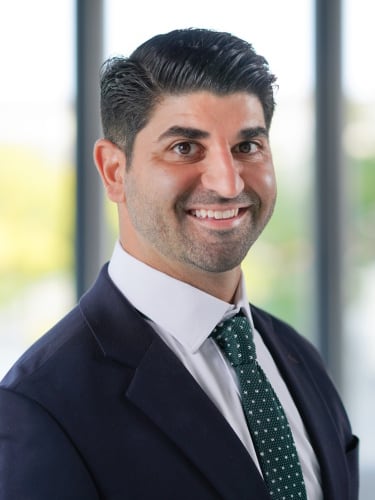
Andrew Dickow, president and MD at Greenwich Capital Group and Townsend Street Capital, worked on the original acquisition during his tenure at General Mills as senior financial analyst for Latin America and South Africa. His perspective on the deal then, and now, reflects how dramatically priorities inside Big Food have shifted.
“In 2012, the environment was very different,” he says. “CPG wasn’t under the pressure it faces today, and the mandate was to expand internationally and build scale in emerging markets. General Mills was under-indexed in Latin America relative to its competitors, and Yoki offered critical mass in Brazil with a meaningful portfolio of brands across snacks, seasonings and convenient meals.”
The acquisition delivered exactly what it was meant to deliver at the time. The definition of value, however, has changed.
From expansion to discipline

The most important factor behind the valuation gap isn’t operational decline, but a shift in priorities.
“The valuation likely made sense at the time given the growth thesis, but that thesis has fundamentally shifted,” says Dickow. “As growth trajectories across once-steady categories started to sputter, investment in an emerging market became a luxury.”
That shift is visible across the consumer packaged goods sector. Growth is harder to find, margins are under pressure and investors are paying closer attention to how capital’s allocated. Deals that once prioritised long-term geographic expansion are now being judged far more tightly on capital returns – even if that means taking a hit on exit.
“Yoki became an asset that wasn’t getting the deliberate time, energy and capital it needed relative to the company’s other priorities,” he adds.
General Mills has been actively reshaping its portfolio for several years, turning over close to a third of its assets since 2018. The emphasis now is on fewer, higher-margin platforms where the company sees clearer long-term potential. Categories such as snack bars, pet food and premium segments are taking priority, while businesses that sit outside that focus are being reassessed.
In that context, the decision to exit Brazil is about reallocating capital, not walking away from a broken business.
A wider reset across global food

The same pattern’s playing out well beyond one company.
“This is not a General Mills-specific story. It is a sector-wide theme,” notes Dickow.
Across the industry, major players are reviewing portfolios that were built for a different era. Kraft Heinz has explored ways to rebalance its business after its megamerger; Unilever has restructured key divisions; Nestlé has been trimming parts of its portfolio while reducing its workforce.
“What you’re seeing is the largest companies in food, the $5bn–$30bn-plus players, the Kellanovas, the Conagras, the Post brands, all culling their portfolios. The category that used to be high growth but is no longer a focus for driving the company forward is still a very large business, and it can find a buyer who will put deliberate focus on it.”
These aren’t distressed assets being offloaded at any price. They’re often sizeable, established businesses that no longer align with a tighter strategic focus. “The seller redeploys that capital into what they believe will be the future of the business,” adds Dickow.
Strategy shift, not market failure

Brazil itself isn’t the issue here and framing it that way misses what’s really going on. “This is much more about shifting priorities at the company level than it is about structural challenges specific to Brazil.”
The original rationale for acquiring Yoki was rooted in scale. General Mills needed a stronger presence in Latin America and Yoki provided it, even if the categories didn’t perfectly match its core portfolio.
“When the company’s strategic focus moved away from international growth and toward margin improvement and portfolio simplification, the rationale for holding an imperfect-fit portfolio in that market essentially evaporated,” he explains.
The market hasn’t fundamentally deteriorated. The company’s priorities have changed. “I wouldn’t characterise this as Brazil being a problem. The strategic context around it changed.”
That distinction applies far beyond this one deal. Across CPG, businesses are being bought and sold based on fit rather than purely on performance. An asset can be stable, profitable and still end up on the divestment list if it no longer aligns with where the parent company’s heading.
Local focus versus global portfolios

The structure of the deal also reflects a broader shift in ownership dynamics.
“This is very real, and it’s not limited to international markets,” Dickow says.
The buyer, Grupo 3corações – a joint venture between Strauss Group and São Miguel Holding – already operates in adjacent food categories in Brazil through brands such as Mrs. Clara and Kimimo. “They understand the Yoki brand, the consumer and the market in a way that a global parent managing dozens of priorities simply cannot match.”
Inside a multinational portfolio, attention’s finite. When a business is no longer central to strategy, it inevitably competes for resources. “When an asset sits inside a large portfolio and isn’t a strategic focus, it stops getting the time, energy, investment, marketing dollars, and human capital it needs to grow, even though it’s still a good business.”
A more focused owner approaches that same asset with a different level of intent.
“You find a local operator who is going to put deliberate intention toward that brand, and it gives it the best chance to survive and be successful.”
A faster pace of change ahead

Looking ahead, there’s little sign this will slow. Portfolio reshaping isn’t slowing – it’s set to accelerate. “I don’t think there’s a specific geography or category that’s uniquely exposed. This is a macro, global theme,” says Dickow.
The underlying driver is the consumer. Expectations around food are shifting and legacy portfolios aren’t always built for what comes next.
“Consumers are increasingly focused on ingredient transparency, cleaner labels, and understanding what they’re putting in their bodies. This used to be a niche segment tied to outlets like Whole Foods and Sprouts, but it’s becoming mainstream.”
That change is opening the door for smaller, more agile brands to challenge established products across categories.
“You’re seeing insurgent brands provide overhauls of legacy favourites across every category, snacks, ice cream, sweets, savoury,” Dickow says. “Large CPG companies are going to continue reshaping their portfolios to get positioned for where the consumer is going, not where the consumer has been.”
For companies operating at scale, that means making more decisions like the Yoki sale. “I expect that to accelerate,” he emphasises. In that context, the Yoki deal looks less like an outlier and more like an early signal.
What looks like a $697m loss on paper is, in practice, a reflection of a much bigger shift: growth is being redefined, portfolios are being tightened and even long-standing assets are being reconsidered through a different lens.
